Glass Fireplaces: One-Sided vs Side-Glass vs Double-Sided (What to Choose for Your Layout)
Glass fireplaces have moved far beyond simple heating appliances.
In modern South African homes, they define architectural lines, frame living spaces, and influence how rooms connect visually. Whether installed in a contemporary open-plan home in Cape Town, a Johannesburg feature wall renovation, or a new-build estate property, glass fireplaces are now as much about design as they are about warmth.
But “glass fireplaces” can mean very different things.
Are you considering a one-sided unit against a feature wall? A side-glass wall-mounted fireplace? A see-through double-sided fireplace acting as a room divider? Or even a four-glass model that creates a panoramic flame effect?
Hydrofire has seen increasing interest in side glass fireplaces and double-sided fireplaces, particularly in open-plan layouts. Yet the right choice depends on architecture, venting configuration, heat distribution, and lifestyle.
This guide explains the differences between one-sided, side-glass, and double-sided glass fireplaces — and helps homeowners decide what works best for their layout.
Hydrofire Explains What “Glass Fireplace” Actually Means
The term “glass fireplace” does not mean the entire unit is made of glass.
It refers to a closed combustion fireplace that incorporates one or more ceramic glass viewing panels. These panels are engineered to withstand high temperatures while allowing uninterrupted flame visibility.
Unlike open fireplaces, glass fireplaces are sealed systems. The ceramic glass panel forms part of the combustion chamber and helps regulate airflow, improve heat efficiency, and contain embers.
Hydrofire’s Fireplaces category includes a wide range of glass-fronted models, from compact wall-mounted fireplaces to large architectural installations designed for double-volume living spaces.
Understanding the structure behind the glass is critical before deciding on configuration.
Hydrofire Compares One-Sided, Side-Glass and Double-Sided Glass Fireplaces
Not all glass fireplaces are created equal. The number and positioning of glass panels influence not only aesthetics but also heat output and installation requirements.
Hydrofire on One-Sided Glass Fireplaces
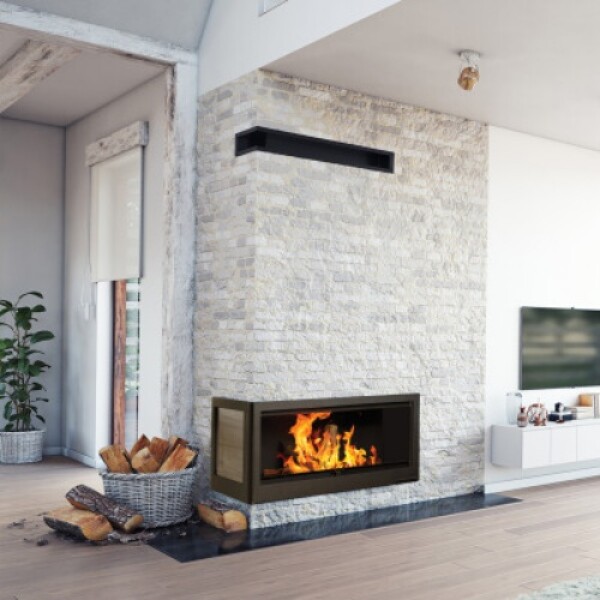
A one-sided glass fireplace is the most traditional closed combustion design. It features a single front-facing ceramic glass panel, typically installed against a wall.
This layout suits feature walls, living rooms, lounges, and bedrooms where the fireplace acts as a focal point. It is often the simplest installation option because venting runs vertically through a flue system without needing to accommodate open access on both sides.
One-sided models generally provide strong forward-directed heat. The wall behind the unit becomes a design anchor, often finished with stone, tile, or plaster detailing.
Hydrofire notes that one-sided units remain the most versatile solution for homeowners who prioritise heat output and straightforward installation.
Hydrofire on Side-Glass Fireplaces
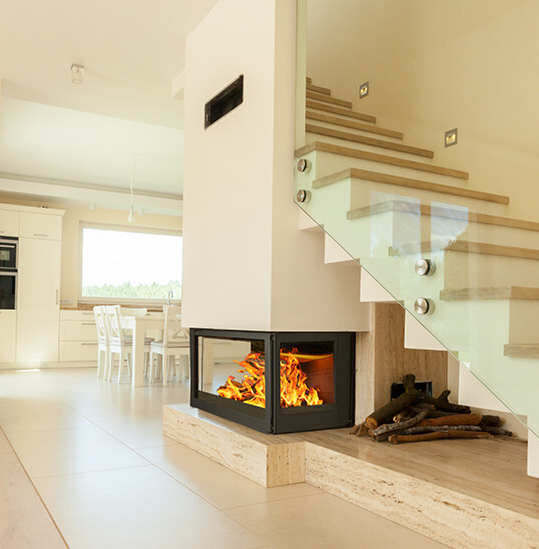
Side glass fireplaces introduce a second viewing panel on one side of the unit. These are sometimes referred to as side-glass wall units or corner fireplaces.
The additional glass panel creates a more dynamic visual effect, allowing flames to be seen from multiple angles. This is particularly effective in open-plan layouts where the fireplace sits near a transitional space between dining and lounge areas.
Hydrofire’s Side Glass Fireplaces category includes wall-mounted and built-in units that extend the flame view beyond a single plane.
Architecturally, side-glass fireplaces work well when installed into partition walls or columns, creating depth without fully dividing spaces.
However, the additional glass panel can slightly alter heat direction. While still efficient, heat dispersal may not be as concentrated forward as in one-sided units.
Hydrofire on Double-Sided and See-Through Fireplaces
Double-sided fireplaces — often referred to as see-through fireplaces — feature glass panels on opposite sides. These installations allow the flame to be viewed from two separate rooms or two zones within an open-plan space.
They are increasingly popular in contemporary homes because they function as architectural dividers without blocking visual flow.
Hydrofire’s Double Sided Fireplaces category includes built-in models designed specifically for wall partitions or structural dividers.
A see-through fireplace can connect a lounge and dining area, separate a bedroom from a bathroom, or divide indoor and enclosed patio spaces.
This configuration creates visual drama and openness. However, installation requires careful planning, particularly regarding venting routes and heat direction.
Hydrofire Explains Where Each Fireplace Configuration Works Best
Layout determines suitability.
Hydrofire on Glass Fireplaces in Open-Plan Homes
Open-plan layouts benefit significantly from side glass fireplaces and double-sided fireplaces.
A side-glass wall unit placed at the edge of a lounge area allows the flame to be appreciated from adjacent spaces without requiring a full structural divider.
A see-through fireplace positioned between lounge and dining areas maintains connection while creating subtle separation.
Hydrofire emphasises that in open-plan homes, positioning affects airflow and heat circulation. Proper planning ensures warmth reaches both zones effectively.
Hydrofire on Feature Walls and Focal Points
For homes with defined lounge areas or statement walls, one-sided glass fireplaces remain strong contenders.
A large-format glass front installation can anchor the room visually while delivering concentrated heat forward into the seating area.
Hydrofire often recommends one-sided or side-glass units for homeowners seeking strong visual symmetry along a single wall.
Hydrofire on Room Divider Installations
Double-sided fireplaces excel when installed into partition walls.
As room dividers, they create warmth and light between spaces without introducing bulk.
However, Hydrofire advises homeowners to consider:
-
Structural support within the dividing wall
-
Venting alignment
-
Heat distribution on both sides
-
Clearance and safety spacing
See-through fireplaces are popular in competitor installations because of their dramatic impact. But performance depends heavily on correct placement.
Hydrofire Discusses Heat and Visibility Trade-Offs
Design preference must be balanced with heating performance.
Hydrofire on Heat Output Direction
One-sided glass fireplaces typically project heat directly forward, making them ideal for focused heating zones.
Side-glass fireplaces distribute some heat laterally due to the additional panel. This creates broader warmth but may reduce intensity in a single direction.
Double-sided fireplaces share heat across two spaces. While this enhances atmosphere, heat output per zone may feel less concentrated than in a single-direction unit.
Hydrofire encourages homeowners to assess room size, ceiling height, and insulation before selecting configuration.
Hydrofire on Flame Visibility and Aesthetic Impact
Flame visibility increases as glass exposure increases.
Side-glass and four-glass models create panoramic views that feel contemporary and architectural.
However, increased glass area also means greater surface cleaning and potential maintenance.
Hydrofire balances aesthetic appeal with practical ownership considerations.
Hydrofire on Cleaning and Maintenance Basics
All glass fireplaces require routine maintenance.
Hydrofire on Ceramic Glass Cleaning
Ceramic glass accumulates soot depending on wood type and burn efficiency.
Cleaning should occur only when the unit is cool. Approved fireplace glass cleaners prevent scratching or damage to the surface.
Side glass fireplaces and double-sided fireplaces naturally have more exposed surface area, meaning cleaning frequency may increase.
Hydrofire on Seal and Gasket Maintenance
Glass panels are sealed with high-temperature gasket material to maintain airtight combustion.
Periodic inspection ensures seals remain intact.
Hydrofire reminds homeowners that proper gasket integrity supports efficient burn cycles and prevents air leaks.
Hydrofire Offers a Quick Checklist Before You Buy a Glass Fireplace
Before purchasing a glass fireplace, homeowners should consider:
First, room size and heat requirements. Larger open-plan areas may require higher-output units.
Second, installation location. Is it a feature wall, corner, or room divider?
Third, venting route. Double-sided fireplaces require precise flue alignment.
Fourth, heat direction preference. Is concentrated warmth or shared warmth more important?
Fifth, maintenance expectations. More glass means more cleaning.
Hydrofire advises visiting the Fireplaces category to compare models visually, then exploring Side Glass Fireplaces and Double Sided Fireplaces options to evaluate layout compatibility.
Hydrofire on Competitor Trends and Why See-Through Fireplaces Are Popular
See-through fireplaces have become popular in competitor designs due to their architectural appeal.
They photograph well. They create openness. They suit modern interiors.
However, Hydrofire notes that popularity should not override practicality.
Double-sided installations require:
-
Thoughtful placement
-
Proper venting systems
-
Adequate structural framing
-
Consideration of heat direction
Incorrect placement can result in uneven heating or visual imbalance.
Hydrofire focuses on layout-driven recommendations rather than trend-driven decisions.
Choosing the Right Glass Fireplace for Your Layout
Glass fireplaces offer more than warmth. They shape spaces.
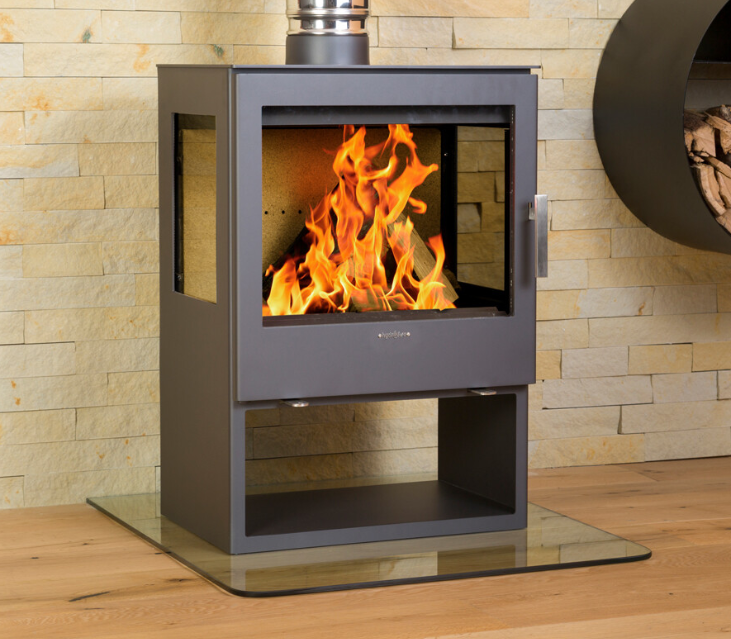
One-sided models provide concentrated heat and clean feature walls.
Side glass fireplaces add depth and multi-angle visibility.
Double-sided and see-through fireplaces create architectural division without blocking light.
Wall-mounted fireplaces introduce modern styling while saving floor space.
The correct choice depends on layout, heat expectations, structural considerations, and lifestyle.
Hydrofire encourages South African homeowners to view glass fireplaces not simply as appliances, but as integrated design elements that must balance performance and placement.
Choosing correctly means understanding how each configuration works — and ensuring it suits the space long after installation.


.jpg "Traditional vs Ultra-Dense Underfloor Heating Systems")
.jpg "Central Heating Systems for Modern South African Homes")
.jpeg "How to Make My Central Heating More Efficient")
.jpg "Do You Need a Thermostat for Underfloor Heating?")